
Your river trip comes to an end this morning. After getting off the plane, you will be taken to the airport.
Trusted Travel Experts Since 2001
Ganges Discovery River cruises in india
8 days from
Ganges Discovery – River cruises in india
Discover the unspoiled cities and villages of rural India along the powerful Ganges river. Explore villages on foot or by bicycle rickshaw, browse craft shops, have barbecues on deserted river islands, visit tea gardens, temples, and monuments, and stroll Varanasi’s winding lanes.
A wonderful 8-day trip to rural India, the erstwhile British Raj, and other places. You can tour Chukar’s historic grand Mughal fort and nearby graves before visiting the cottage industry workshops to learn about local workmanship. Take rowing boats through the colorful bathing ghats along the Ganges in Varanasi early in the morning to observe the religious ceremonies performed there every morning.
After a guided tour of Varanasi’s bustling streets and the mesmerizing nighttime Ganga Aarti ceremony on the banks of the great Ganges River, your exploration of one of the oldest cities in the world continues.
Visit the holy Buddhist sites in Sarnath and Deer Park, the latter of which is the location of Buddha’s first sermon.
Speak to someone who's been there
Start planning your tailor-made trip by contacting one of our destination specialists
+91 - 9818885102 Make an enquiryItinerary idea in detail
Day 1 -Panna National Park:
Depending on your flight/train, Taxi will pick you up and drive to Panna National Park. On reaching the resort, After check-in, have some lunch and take some rest before your evening activity. In the evening we go for an evening safari or night safari in the buffer forest of Panna National Park. Seeing the jungle and wildlife animals at night is an amazing experience. Animals that can be seen during night safari in Panna National Park are Hyenas, Rusty-spotted cats, Jungle cats, Porcupines, Honey badgers, Desert cats, fishing cats, Sloth Bears, Tiger, Leopard, Civet cats, and lots of other nocturnal animals. Here in Panna, national park, night safaris are more fruitful than in other popular tiger reserves.
Meals: Lunch & dinner
Activity: Evening safari or night safari.
Day 2- Panna National Park:
Panna National Park is a national park located in Panna and Chhatarpur districts of Madhya Pradesh in India. It has an area of 542.67 km2 (209.53 sq mi). It was declared in 1994 as the twenty-second Tiger Reserve of India and the fifth in Madhya Pradesh, Panna was given the Award of Excellence in 2007 as the best-maintained national park of India by the Ministry of Tourism of India. It is notable that by 2009, the entire tiger population had been eliminated by poaching with the collusion of forest department officials.
The forests of Panna National Park along with Ken Gharial Sanctuary and adjoining territorial divisions form a significant part of the catchment area of the 406 km Ken River, which runs northeast for about 72 km through the park. Panna National Park and the surrounding forest area of North and South Panna forest division is the only large chunk of wildlife habitat remaining in northern Madhya Pradesh.
Reintroduction of Tigers in Panna National Park
(From 0 to 84-86 Tigers in 14 years)
Panna National Park was declared as one of the Tiger reserves of India in 1994/95 and placed under the protection of Project Tiger. The decline of the Tiger population in Panna has been reported several times. Two female tigers were relocated there from Bandhavgarh National Park and Kanha National Park in March 2009. However, the last male tiger from this landscape had already disappeared. A committee to look into the disappearance of the tigers was formed.
In June 2009, it was officially announced that the Reserve, which had over 40 tigers six years earlier, had no tigers left and only two tigresses, which were brought in a little earlier. In February 2012, only three years later, the entire tiger population of the reserve was considered eliminated. The Madhya Pradesh government did not determine responsibility for the debacle, nor did it pass the inquiry to the Central Bureau of Investigation despite requests from the Ministry of Environment and Forests and the Prime Minister's Office.
The Ministry of Environment and Forests (MoEF) approved a proposal to translocate two tigers and two tigresses to the reserve. One female each from Bandhavgarh National Park (coded T1) and Kanha National Park (T2) were translocated to Panna Tiger Reserve. A tiger male, coded T3, was brought from Pench Tiger Reserve but strayed out of the park shortly thereafter, in November 2009. The tiger started walking toward its home in Pench National Park, indicating homing instinct. It moved steadily through the human-dominated landscape without causing any conflict. Forest department staff tracked it continuously for over a month and finally brought it back to the Panna Tiger Reserve. It then settled well, established territory, and started mating. The tigress, T1, translocated from Bandhavgarh National Park, gave birth to four cubs in April 2010 of which 2 survive to date. The second tigress, T2, translocated from Kanha National Park gave birth to four cubs several months later and all four survive to date. A third tigress, coded T4, an orphaned cub was reintroduced to Panna in March 2011. She learned hunting skills with the help of the male and mated with him. She was found dead on 19 September 2014 of an infection caused by its radio collar. Her sister T5 was released in Panna in November 2011.
Today the population of Tigers in Panna National Park is from 0 to 84-86 in 14 years.
We start our day early with the morning safari. Early morning is the best time to look for the big cats and other predators. The birdlife is also very active during this time of the day. Tiger the king of the jungle, roams freely in this secure, though a bit small habitat along with his fellow beings leopard, wild dog, wolf, hyaena, and smaller cats. Sloth Bear has his favorite home in the rock escarpments and undisturbed vales. The wooded areas are dotted with sambar the largest of Indian deers, chital, and chowsingha . One can easily see Blue Bull and Chinkara in most open areas in the grasslands, especially on the periphery. The avifauna comprises more than 200 species including a host of migratory birds. One can see White necked storks, Bar-headed geese, Honey Buzzard, Blossom-headed Parakeet, Paradise flycatchers, Slaty headed Scimitar babblers including 5 species of Vultures. A dry and hot climate, in union with shallow Vindhyan soils, has given rise to dry Teak and dry mixed forest. The dominating vegetation type is Miscellaneous Dry Deciduous forest interspread with grassland areas. Other major forest types are riverine, open grasslands, open woodlands with tall grasses, and thorny woodlands. Post lunch we go for our afternoon safari. Overnight stay in Panna.
Activity: Morning & evening jungle safari
Meals: Breakfast, lunch & dinner
Day 3- Panna National Park:
same as day 2
Activity: Morning & evening jungle safari
Meals: Breakfast, lunch & dinner
Day 4- Khajuraho:
Today we will have an early breakfast at our lodge and drive to Khajuraho, a Unesco world heritage site. Khajuraho temples are primarily noted for their erotic sculptures. The land of beautiful temples, Khajuraho in Madhya Pradesh draws travelers from across the globe. Being an important part of Madhya Pradesh tourism, the place speaks volumes about the history and culture of the bygone era. But these temples are so much more than their erotic sculptures!
These world-famous Indian temples were built during the Chandela dynasty and most temples were constructed between 950 and 1050 AD during the reigns of Hindu Kings Yasovarman and Dhanga.
Khajuraho has a beautiful market where you can roam around and buy beautiful stuff made by locals and souvenirs, and lots of multicuisine cafes and restaurants where you can taste different food. Overnight stay in Khajuraho.
Activity: Khajuraho temple tour
Meals: Breakfast
Day 5 - Khajuraho:
Today according to your flight/ train timing we will drop you. The trip ends here.
Activity: None
Meals: None
Upon arrival, board your cruise ship at Varanasi. As your ship sails downstream for a short distance before dropping anchor for the night, unpack and retire into your stateroom. Enjoy dinner while sailing.
You’ll sail to Rajghat this morning, get off, and drive to Chunar. Visit the neighboring Mughal tombs, historic British cemetery, and large Mughal fort. Other attractions in this area include the carpet-weaving and Chunar ceramics cottage industries.
Before reboarding at Rajghat, stop by the Ramnagar Maharaja’s Palace and Museum on the way back.
Today, take a tour of the surrounding attractions and the holy city of Varanasi. Take rowing boats early in the morning along the Ganges’ vibrant bathing ghats. Drive to Sarnath, a holy Buddhist site, and Deer Park, the location of Buddha’s first sermon, before visiting the Archaeological Museum.
Join the nighttime Ganga Aarti ritual after taking a guided tour of Varanasi’s bustling lanes in the afternoon to feel the city’s pulse.
Before traveling to the city of Jaunpur to view the Mughal Bridge, explore its ancient fort, and see the magnificent Atala mosque, enjoy breakfast on board. Alternatively, some people could choose to remain and peruse the enticing retail options in Varanasi.
After lunch, head back to the ship and continue downstream into Ghazipur. Enjoy the view from the sundeck this afternoon, or take advantage of the amenities offered by the ship.
You will set foot on land in Ghazipur today to visit the towering tomb of Lord Cornwallis, the general who George Washington defeated in 1781 and who is often believed to be to blame for the loss of the American colonies.
Spend some time exploring the bustling Ghazipur bazaar while on land for a truly authentic Indian experience. Afterward, head for Buxar.
Disembark in Buxar, a rural community, after breakfast. Buxar is renowned for the war that took place there in 1764 and established the groundwork for the British Raj. Visit the graveyard of the former East India Company in the city and the memorial on the battlefield. Later, take a quick bike rickshaw ride up to Buxar’s ghats.
This morning, travel past the busy river port of Doriganj and the intersection with the Sone River to reach a ghat or set of river steps, from which you may explore the magnificent little Mughal tomb at Maner. Later, while taking in the landscape and the ship’s amenities, sail down to Patna and drop anchor.
What Our Clients Say About Us
Accommodation options

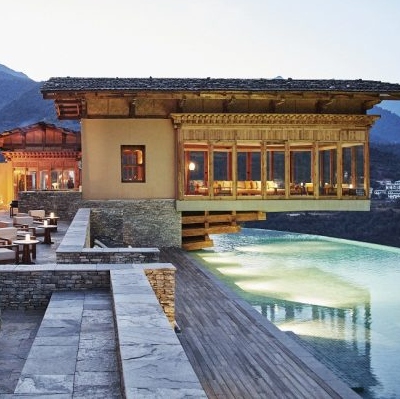
Taj Hotel & Resort
InterContinental Hotels Group offers global luxury stays and exceptional service.
Inclusion & Exclusion
Inclusions
- Luxury accommodation in handpicked hotels
- Private air-conditioned vehicle transfers
- Professional English-speaking guide services
Exclusions
- International and domestic airfare
- Personal expenses (laundry, phone calls, etc.)
- Meals not mentioned in the itinerary